Faith · Memory · The Roman Empire

Words to Live By,
Learned by Heart

How the earliest Christians carried an entire faith through a mostly unlettered empire — in short, sayable statements called creeds.

An illustrated pamphlet Powered by Benjamin Stafford After Mary Lou Cornish · TheCollector

I · The World of the Word

An Empire That Mostly Couldn't Read

Jesus's Great Commission sent his followers out to teach all nations — but most of the people they would meet had never held a pen.

Nobody knows exactly how well Romans read, partly because we don't know what "literate" even meant to them. Someone who could sign a name? Read a notice but never write one? Working from the surviving evidence — inkwells, styluses, and texts scratched onto papyrus, stone, metal, and animal skin — scholars estimate that perhaps one person in ten or twenty, mostly men, had even basic reading and writing skills.

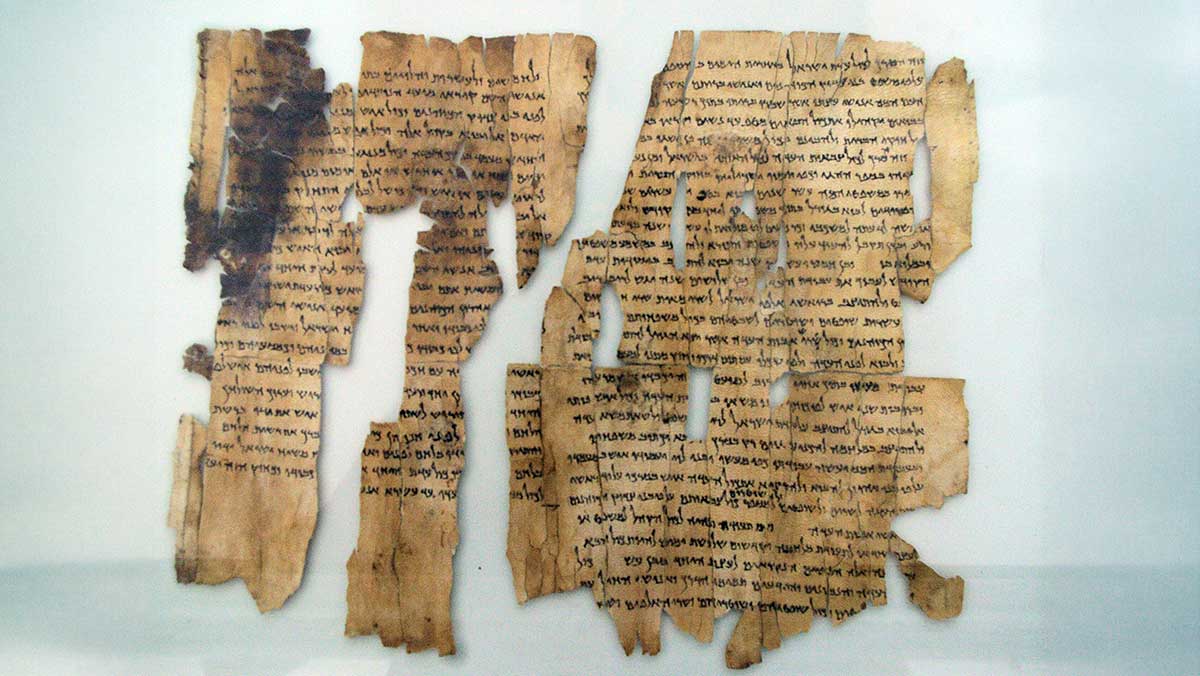
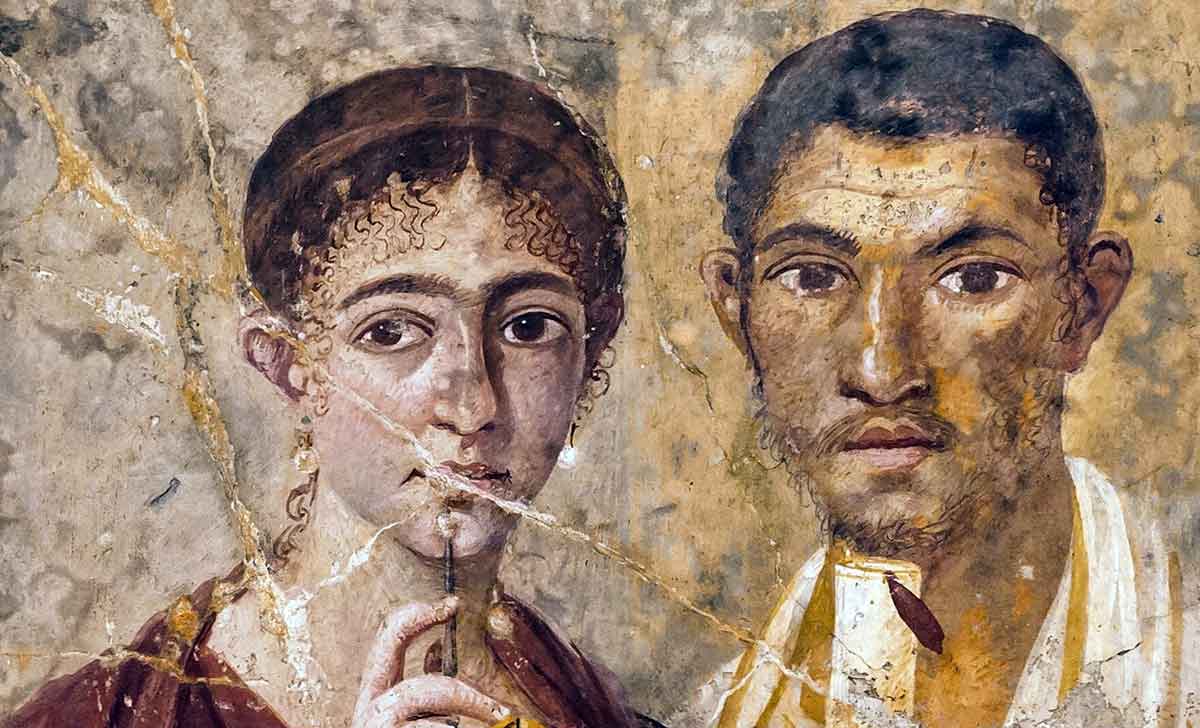
Writing still surrounded daily life. A single Egyptian town, Oxyrhynchus, yielded roughly half a million documents. The Dead Sea Scrolls from Qumran number over 900, most on sheep and goat parchment — papyrus had to be shipped in from Egypt and could be pricey. Walls carried graffiti; graves carried epitaphs; and in Pompeii, a baker named Terentius Neo posed for a fresco beside his wife, who holds a stylus and a wax writing tablet like a badge of standing.

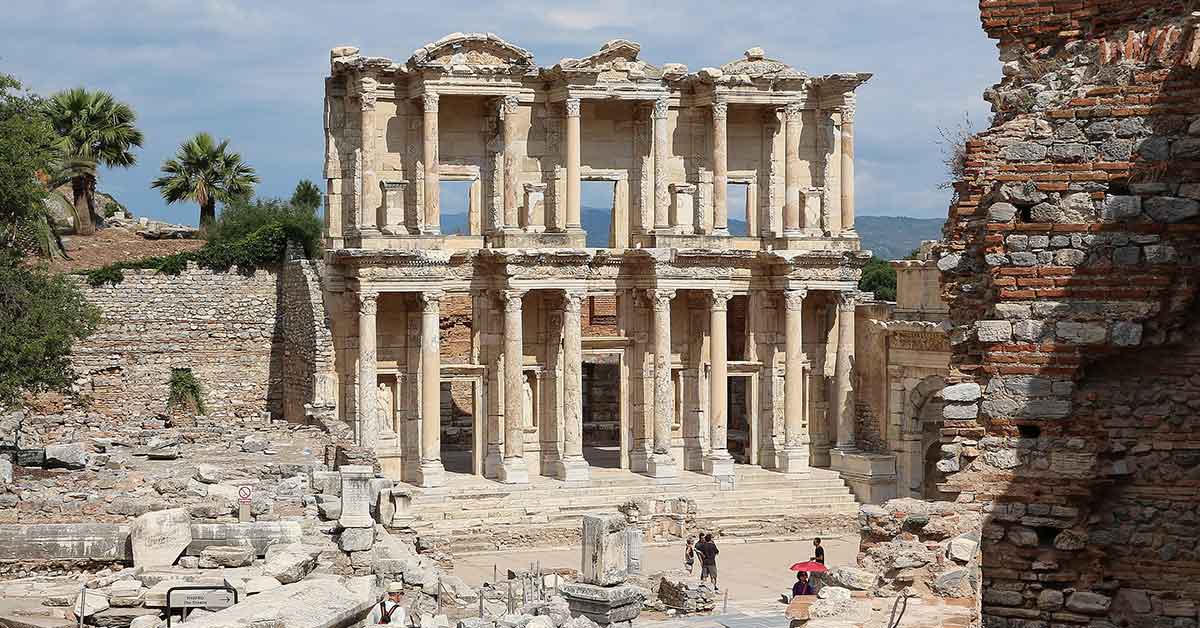
Great libraries anchored the era's book culture, too. Alexandria's, founded in 295 BC, held thousands of scrolls alongside lecture halls, observatories, even a zoo — before fire ravaged it in 48 BC. The Celsus Library at Ephesus also burned with its collection; only its restored facade stands today. Books existed. Readers were rare. That gap is where the creed was born.

Fragment of the Dead Sea Scrolls +
Dead Sea Scrolls fragment · Wikimedia Commons
Pompeii fresco of Terentius Neo and his wife holding a stylus and tablet +
Terentius Neo & wife, Pompeii fresco
Facade of the Celsus Library at Ephesus +
Celsus Library, Ephesus · photo B. Gagnon
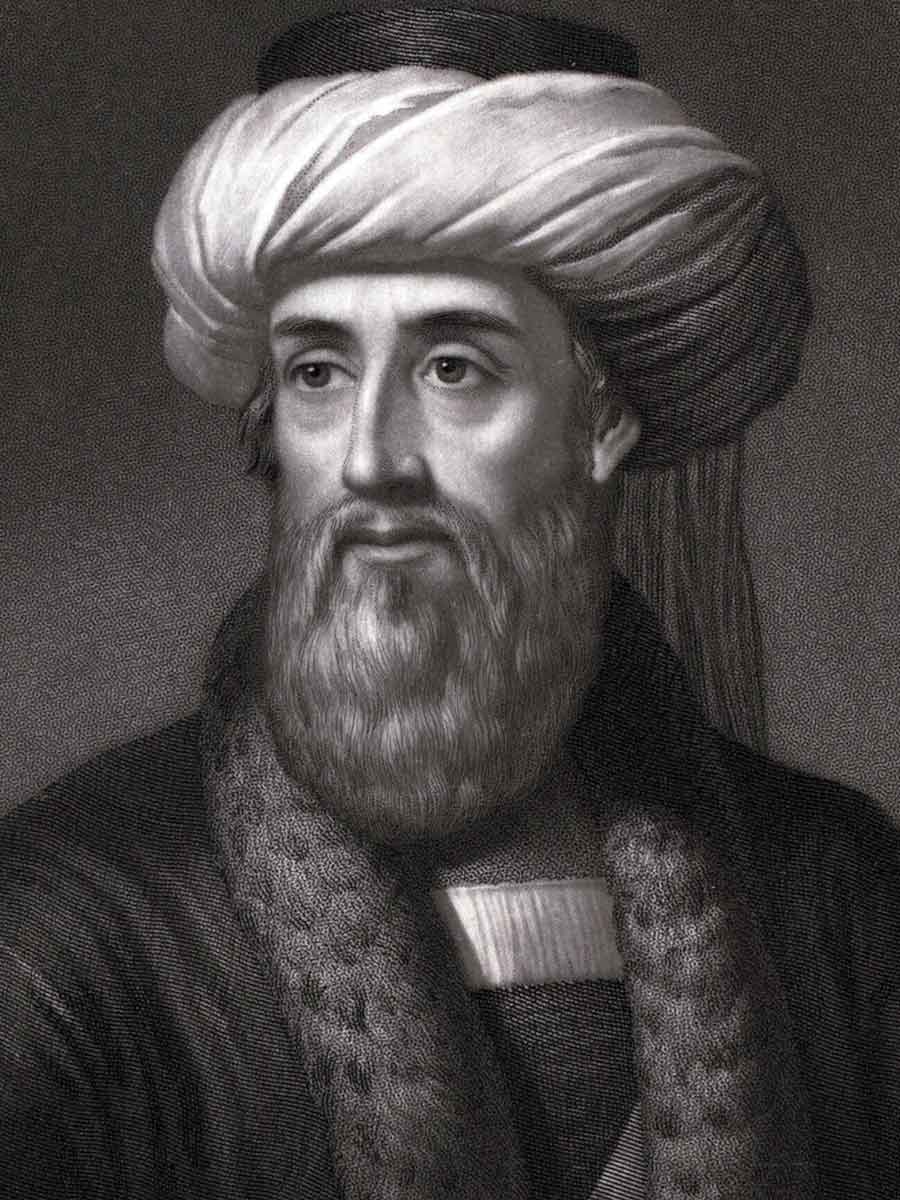
Engraved portrait of the historian Flavius Josephus +
Flavius Josephus, by Thomas Addis Emmet, 1880 · NYPL

A People of the Book

The Jews and Reading

The first-century historian Josephus boasted that Jewish children were schooled in reading — a claim scholars suspect was polished by national pride. Still, the pattern is real: temples and synagogues always kept scripture on hand, scrolls were stored in clay jars against the elements (Jeremiah 32:14 mentions the practice), and the book of Acts records scripture being read aloud week after week. Even those who couldn't read heard the text constantly. Faith traveled by ear.

II · The Hands Behind the Gospels

Could the Evangelists Even Write?

When Peter, a fisherman, dazzled the temple authorities in Acts 4, they marveled that an "unschooled" man could argue so well — meaning untrained in the Law, not necessarily unable to read. But the question matters most for the four whose names sit atop the Gospels.

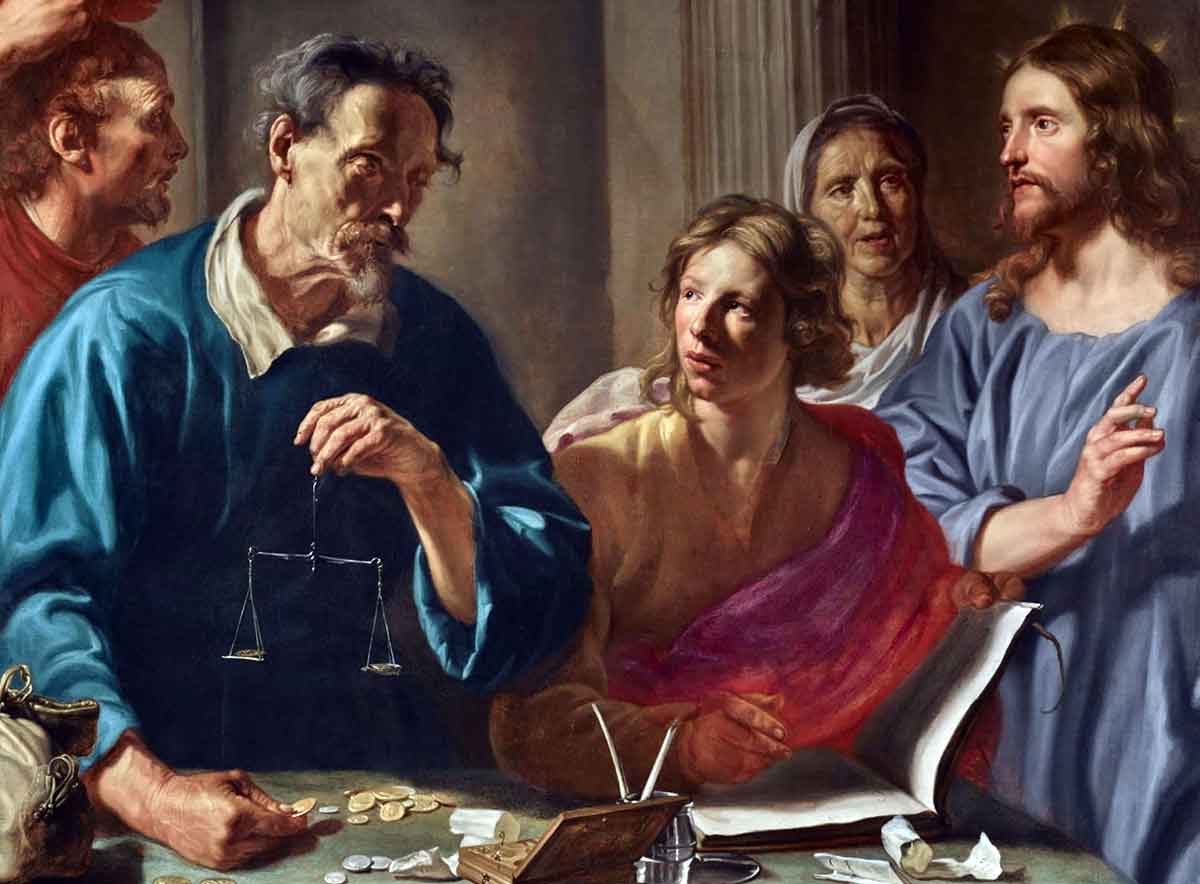
The Calling of Saint Matthew by Charles and Michaelina Wautier +
The Calling of Saint Matthew · Wautier

Matthew

The Tax Collector

A professional of the pen. Tax men carried pinakes — wax-coated tablets scratched with a metal stylus — and Matthew may have juggled Greek, Latin, and Aramaic. His neighbors likely loathed him for working with Rome, but his literacy was never in doubt.

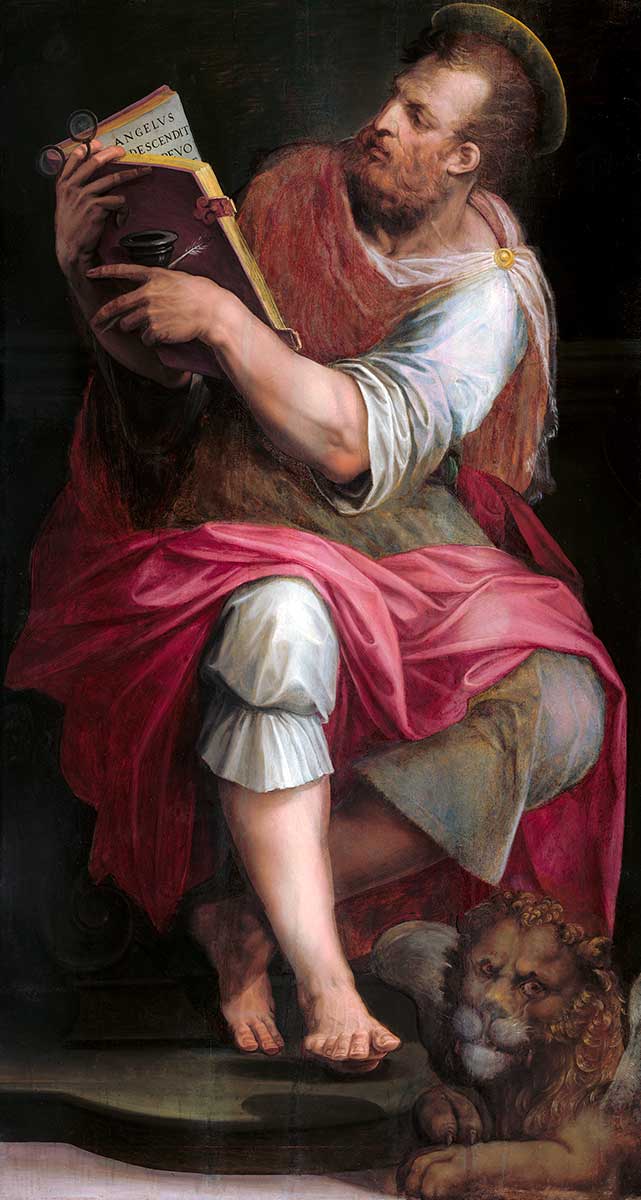
Saint Mark by Giorgio Vasari +
Saint Mark · Giorgio Vasari, c. 1570

Mark

Peter's Friend

A Gentile whose account, scholars believe, preserves Peter's memories. His Greek is the plainest of the four — one reason some think he dictated to a scribe, a service even the poor could afford in the Roman world.

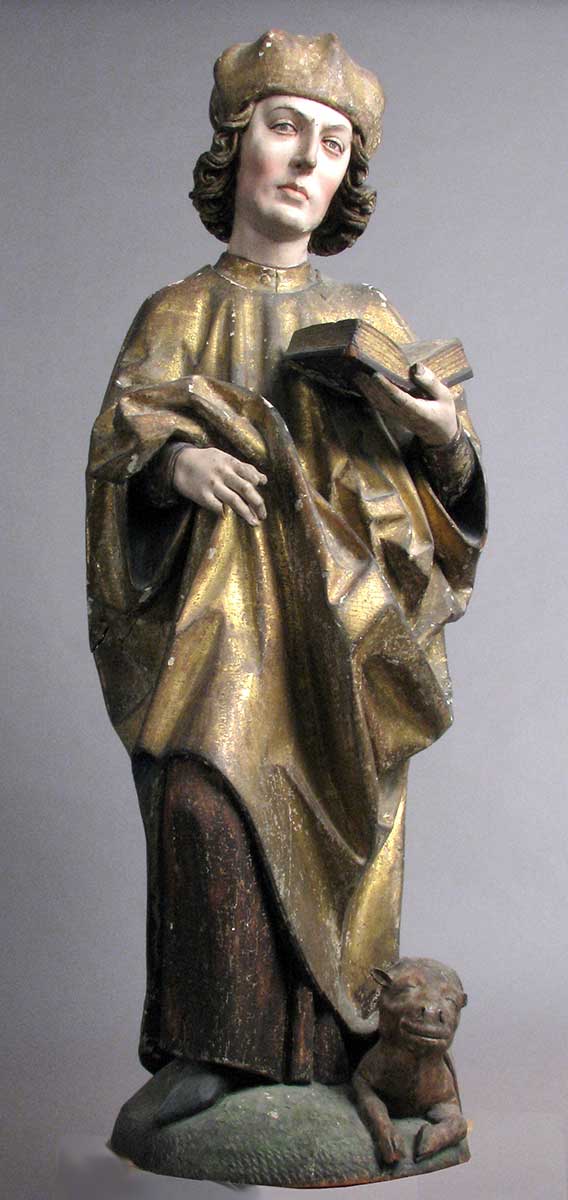
German wood sculpture of Saint Luke, late 15th century +
Luke, German wood sculpture · The Met

Luke

Physician & Historian

A doctor and self-declared researcher, easily the most polished writer of the group. He likely drew on Mark and Matthew, then went on to write Acts as he traveled with Paul — an eyewitness turning history into text.

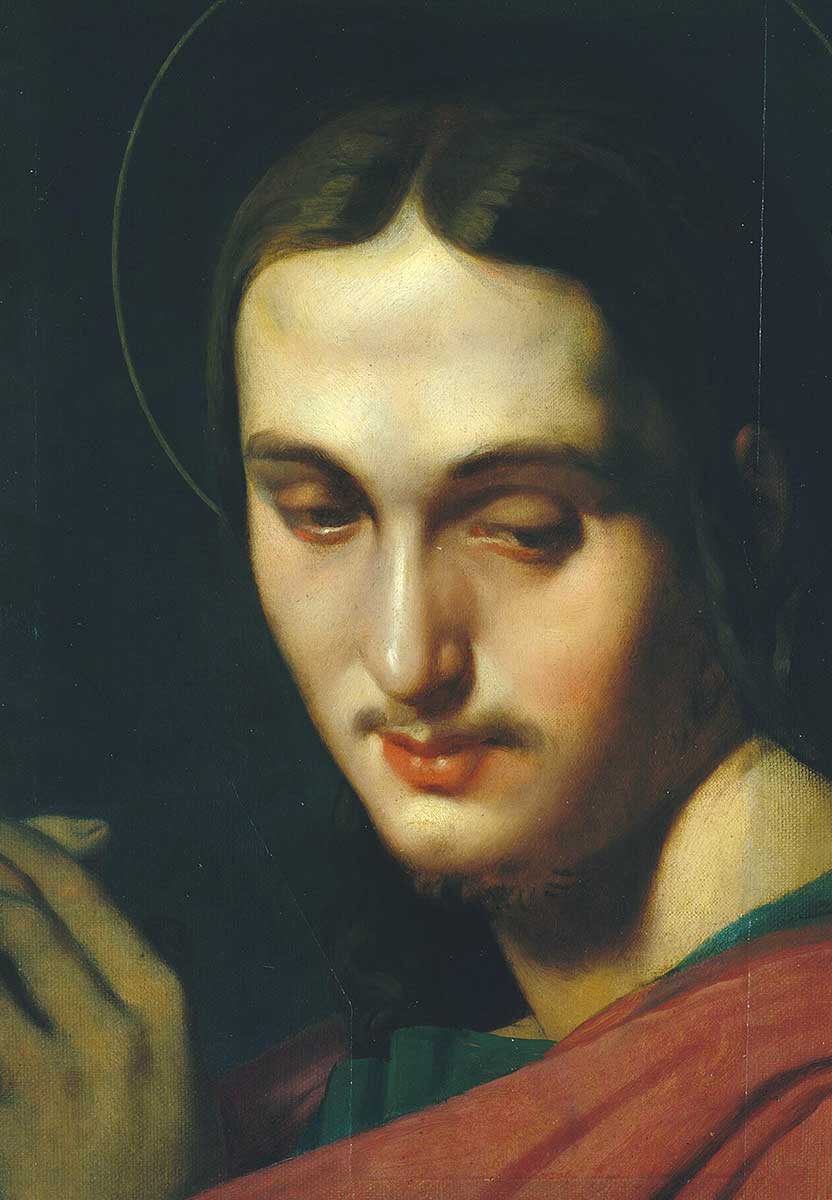
John the Evangelist by Jean-Auguste-Dominique Ingres +
John the Evangelist · Ingres

John

The Beloved Disciple

A fisherman — but from a prosperous family whose business hired extra hands. And Hebrew boys memorized the Torah before age twelve. John may well have handled Aramaic, Hebrew, and Greek; if not, a scribe could take his dictation.

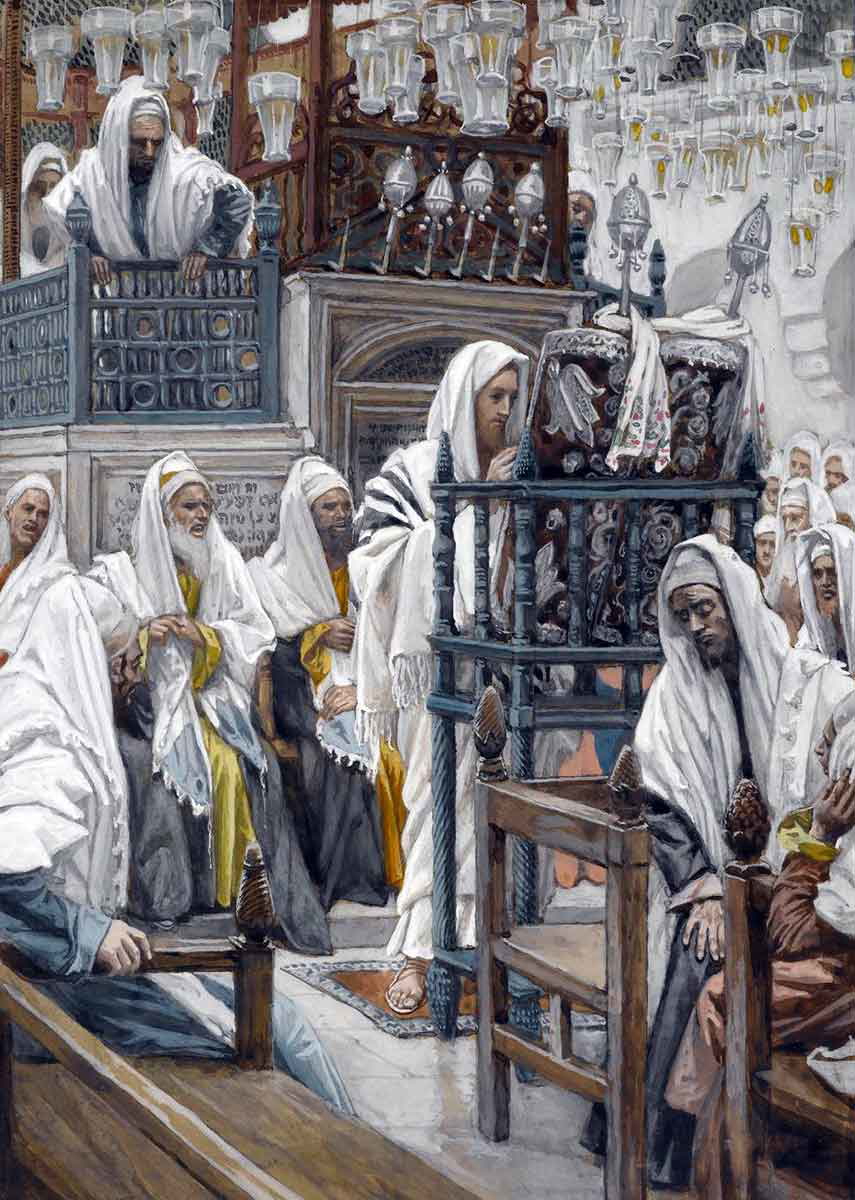
Jesus Unrolls the Book in the Synagogue by James Tissot +
Jesus Unrolls the Book in the Synagogue · James Tissot · Brooklyn Museum

The Reader of Nazareth

Could Jesus Read?

Luke settles it with a scene: on a Sabbath in Nazareth, Jesus stands in the synagogue, unrolls the scroll of Isaiah, and reads the prophecy of good news to the poor and freedom for captives —

"The Spirit of the Lord is upon me, because he has anointed me to proclaim good news to the poor..." Isaiah 61 · read aloud in Luke 4

— then rolls it up, sits down, and declares the words fulfilled in himself. Reading: yes. Writing is less certain — the famous moment where he writes in the dust (John 8) is a later addition to the text, so many scholars set it aside as evidence.

III · From the Latin

CREDO

"I believe."

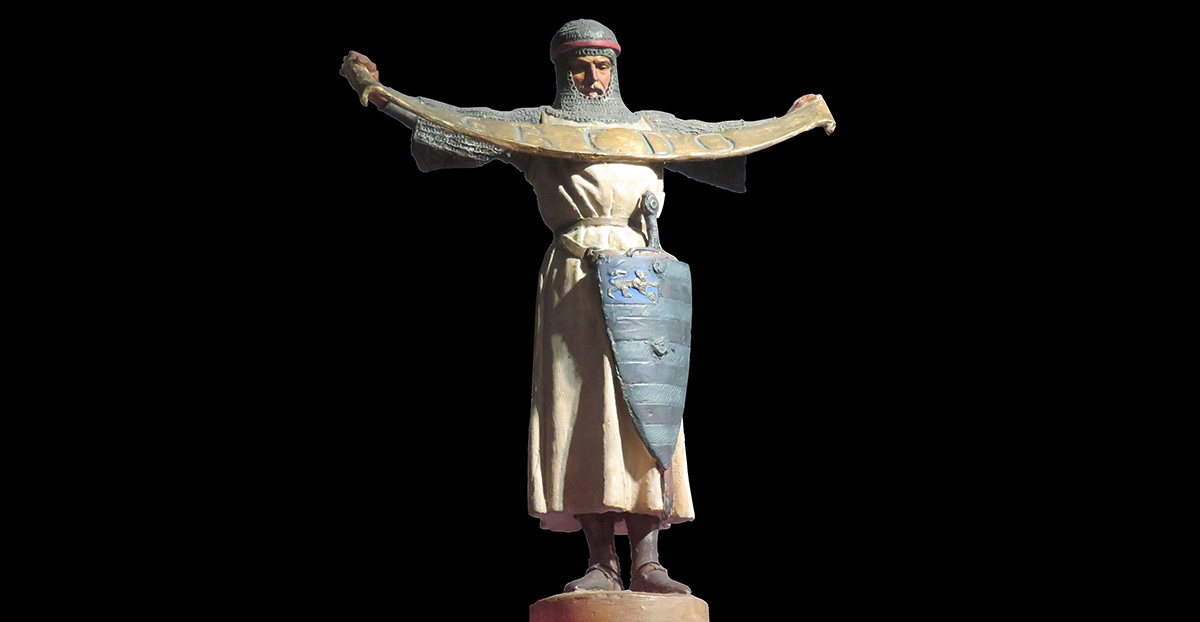
A creed is a faith condensed: a plain, rhythmic summary of core beliefs built to be memorized, recited, and passed mouth to mouth. In a world of few readers, creeds did three jobs at once — they spread the Gospel orally, guarded it against creeping heresy, and bound scattered believers into one community.

Credo, sculpture by Emmanuel Fremiet +
Credo · Emmanuel Frémiet, c. 1885 · Musée d'Orsay

IV · Scripture's Oldest Confessions

Five Creeds Hidden in the Bible

The oldest is the Shema of Deuteronomy 6 — "Hear, O Israel: the LORD our God, the LORD is one" — Israel's declaration of one God. The New Testament adds its own: Peter's "You are the Christ," a Roman centurion's confession at the cross, and longer formulas that many scholars believe predate the letters that preserve them.

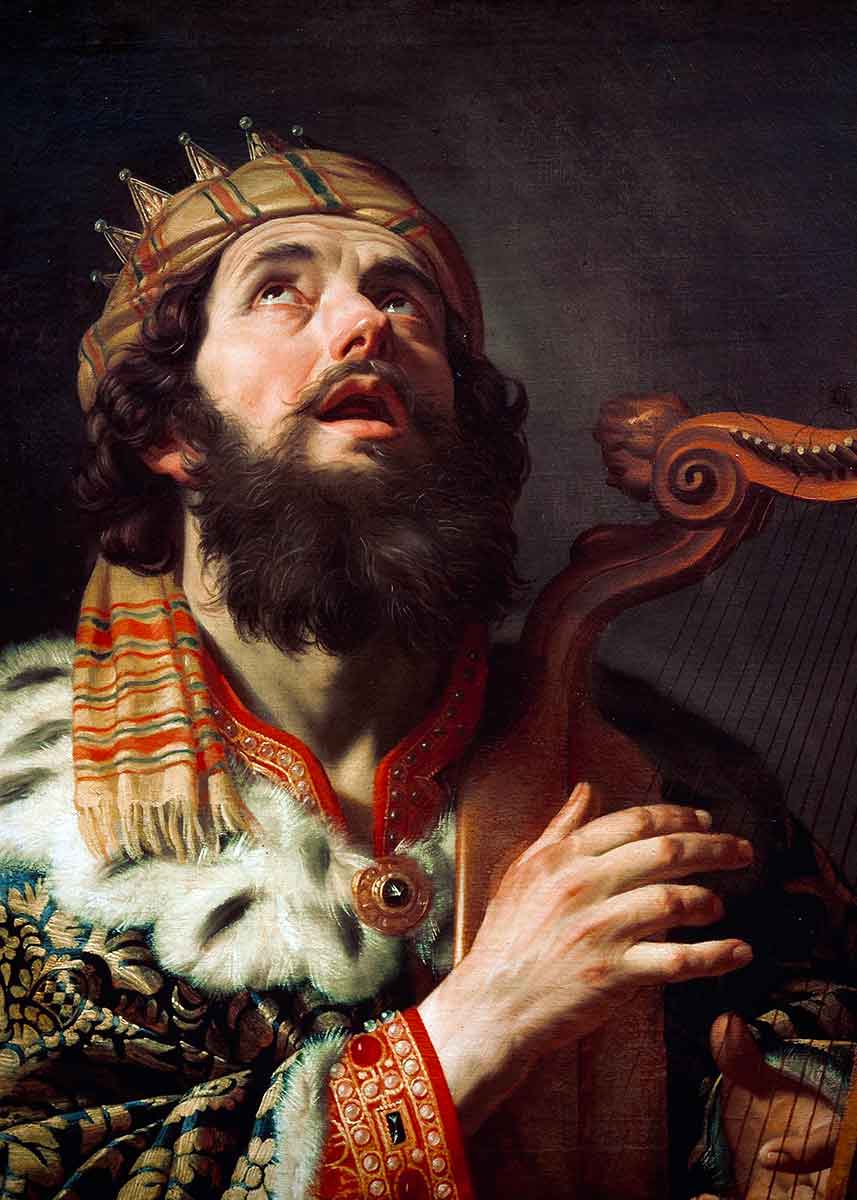
King David Playing the Harp by Gerard van Honthorst +
King David Playing the Harp · Gerard van Honthorst, 1622

Romans 1:3–4

Son of David, Son of God

Concerning his Son, descended from David according to the flesh, and declared the Son of God in power by his resurrection from the dead: Jesus Christ our Lord.

One sentence, two natures. The Messiah had to be David's physical heir — Isaiah promised a reign on David's throne; Jeremiah foresaw a righteous Branch from his line — and the resurrection declared him divine. Recite this, and you've taught a new believer that Christ is fully man and fully God.
The Christian Martyrs' Last Prayer by Jean-Leon Gerome +
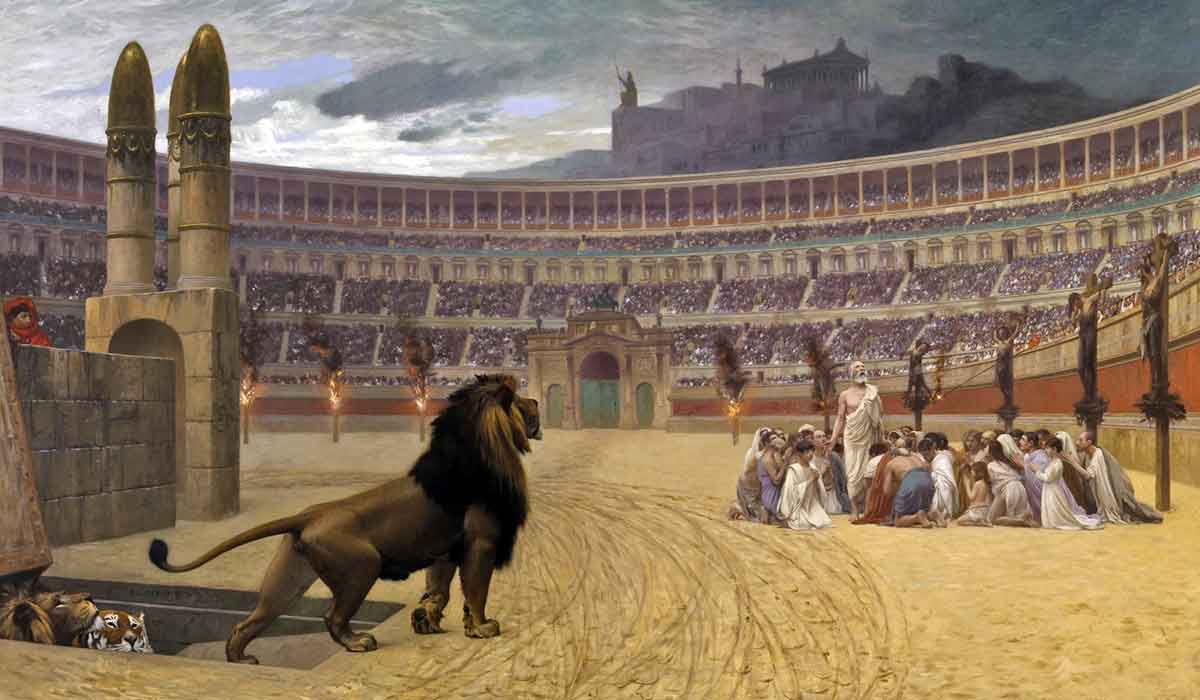
The Christian Martyrs' Last Prayer · Jean-Léon Gérôme · Walters Art Museum

Romans 10:9

A Confession Worth Dying For

If you confess with your mouth that Jesus is Lord, and believe in your heart that God raised him from the dead, you will be saved.

Rome tolerated any god you liked — provided you also honored the emperor and the state cult. Christians wouldn't, and Rome read that refusal as treason. So saying "Jesus is Lord" out loud wasn't a formality; it was risking your life. The public confession proved the private faith was real.

The Creation of Adam by Michelangelo +
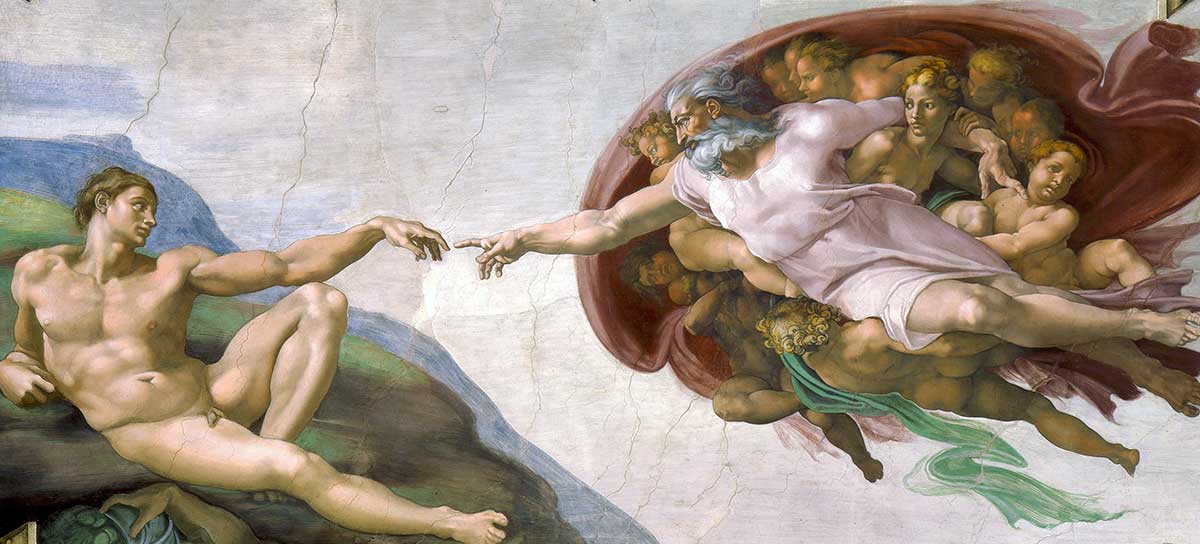
The Creation of Adam · Michelangelo, c. 1511

1 Corinthians 8:6

One God — and One Lord

Yet for us there is one God, the Father, from whom all things came... and one Lord, Jesus Christ, through whom all things came, and through whom we live.

Paul takes Israel's ancient Shema and expands it, folding Jesus into the identity of the one God — an early glimpse of the Trinity, spoken into an empire crowded with deities. It also names Christ as co-creator of everything, doubling down on his divinity for both monotheist and polytheist ears.

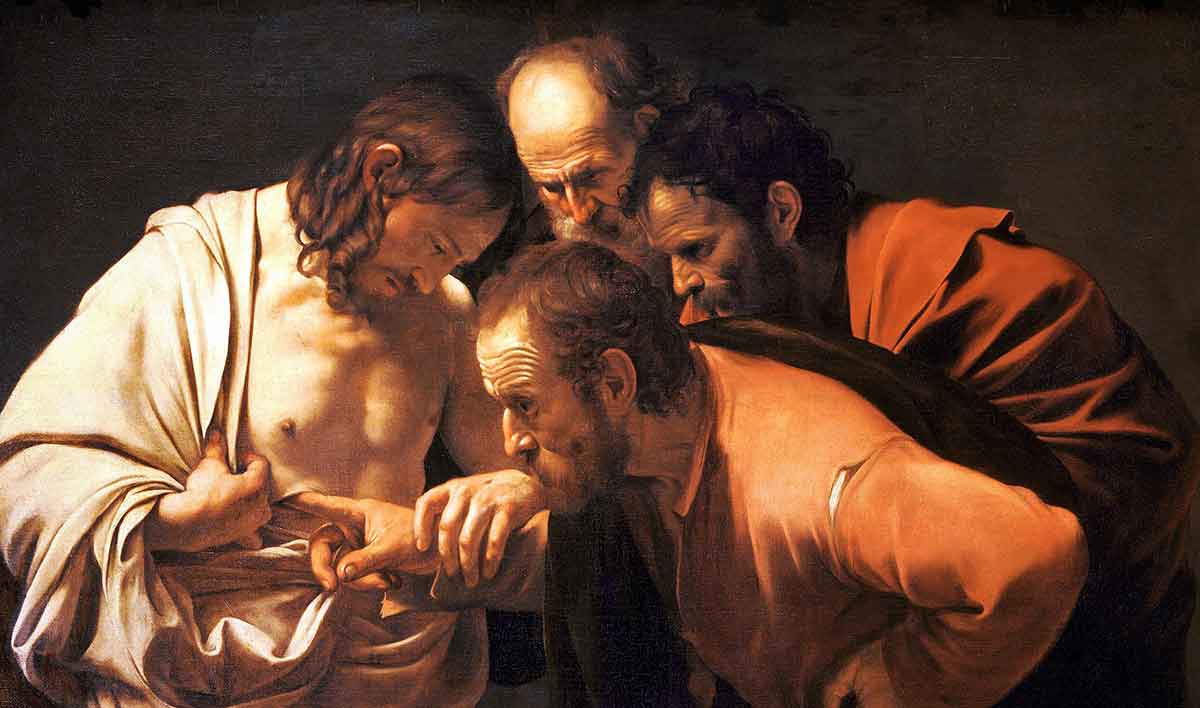
The Incredulity of Saint Thomas by Caravaggio +
The Incredulity of Saint Thomas · Caravaggio, c. 1601–02

1 Corinthians 15:3–7

The Gospel in Four Beats

Christ died for our sins according to the Scriptures; he was buried; he was raised on the third day; and he appeared to Cephas, then to the Twelve.

Died, buried, raised, seen — the whole Gospel in a formula most scholars believe Paul received rather than wrote, making it older than his letter. Its punchline is witnesses: the frightened disciples behind a bolted door, doubting Thomas demanding to touch the wounds. What Paul preached was what Peter and John had seen.

V · The Fifth Creed

The Hymn of Christ

Philippians 2:6–11 is the longest and most lyrical of the biblical creeds — so poetic that many scholars think the early churches sang it, and so unlike Paul's usual style that most doubt he composed it himself. It falls in two movements: what Christ did for humanity, then what God did for Christ.

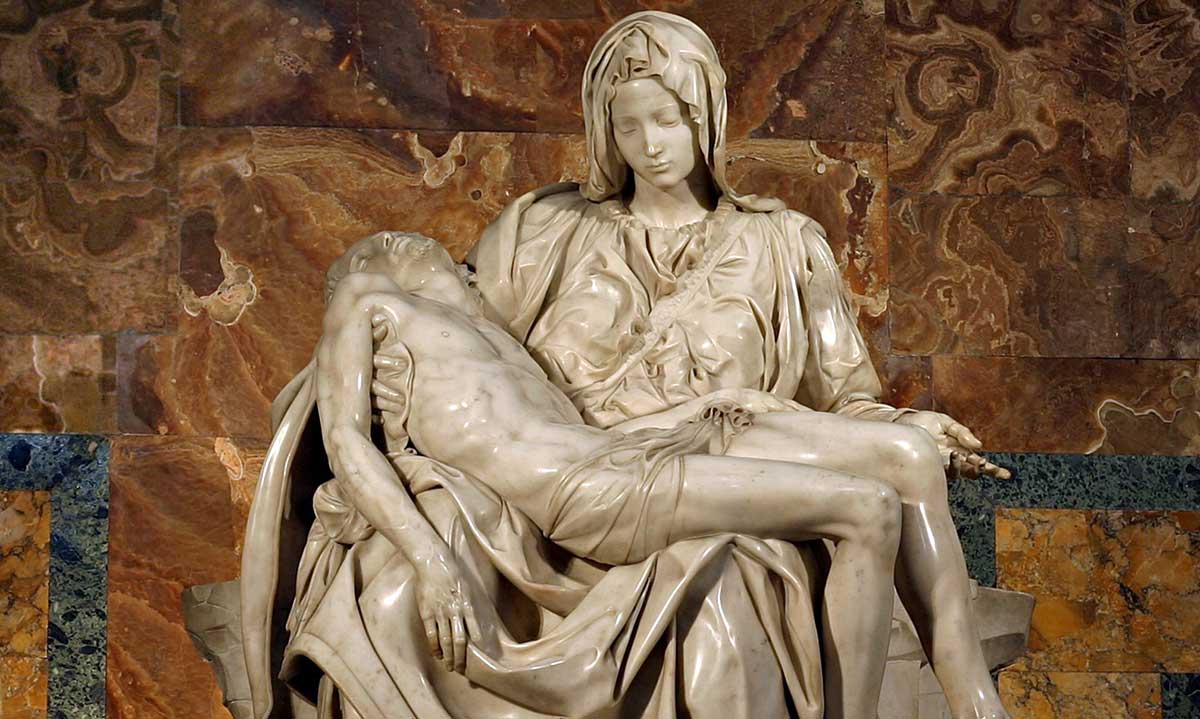
Pieta by Michelangelo +
Pietà · Michelangelo, c. 1499
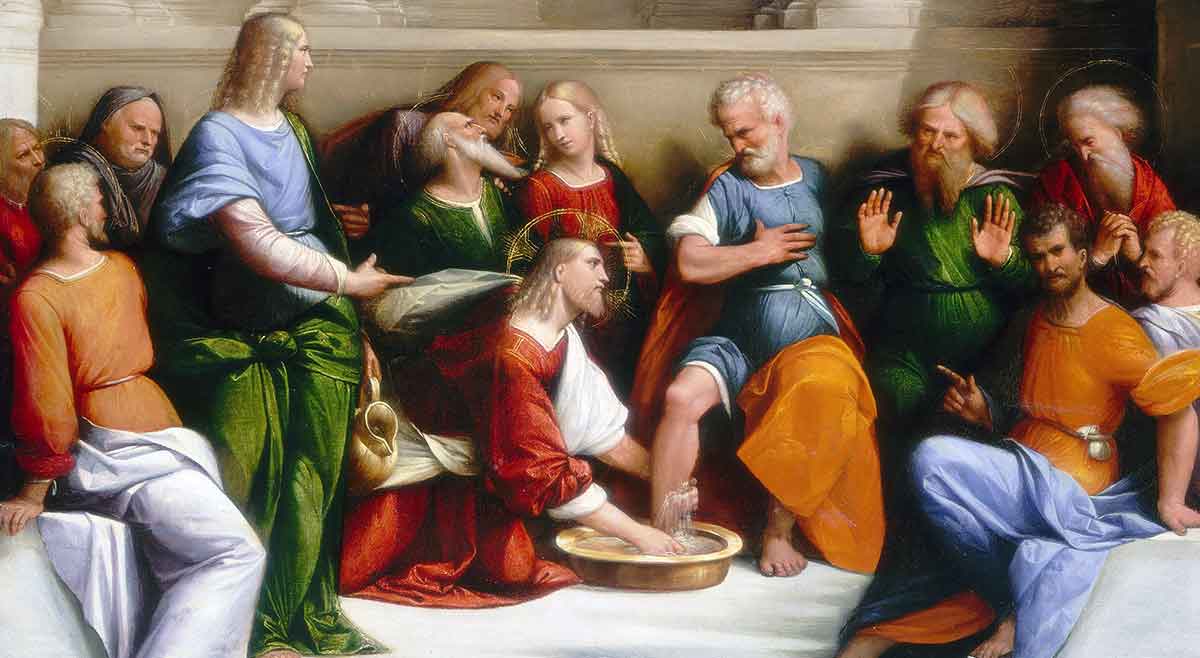
Christ Washing the Disciples' Feet by Benvenuto Tisi +
Christ Washing the Disciples' Feet · Benvenuto Tisi · National Gallery of Art

Paul quotes the hymn to teach quarreling Philippians a practical lesson — carry yourselves with the humility Christ carried to the cross. But underneath the ethics runs a complete theology of Jesus's story in three stages: eternal pre-existence as God, incarnation and crucifixion, and final exaltation.

The opening phrase, "being in very nature God," is doing precise work. "Being" is a participle, implying existence without beginning; "nature" means essence itself, not mere personality. Father and Son, the hymn insists, have always been one in being. And this eternal one chose to set aside every divine privilege — accepting crucifixion, the execution Rome reserved for its worst criminals.

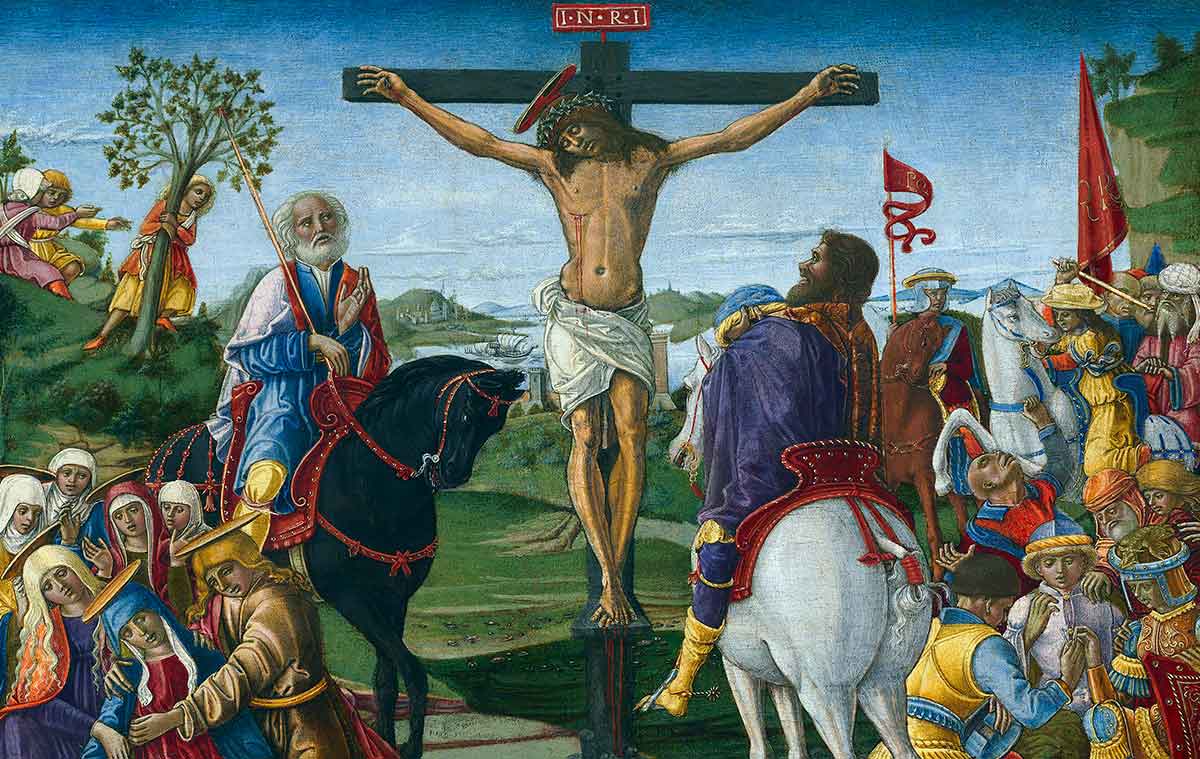
The Crucifixion by Benvenuto di Giovanni +
The Crucifixion · Benvenuto di Giovanni, c. 1491

Descent

He "made himself nothing," taking a servant's nature — the hymn's first movement, verses six through eight, traces the longest possible fall: from equality with God to obedience unto death on a cross.

Ascent

Then the direction reverses. God "super-exalted" him — the Greek word is stronger than any ordinary glorification — granting the name above every name, so that one day every knee bows and every tongue confesses him Lord, willing and unwilling alike.

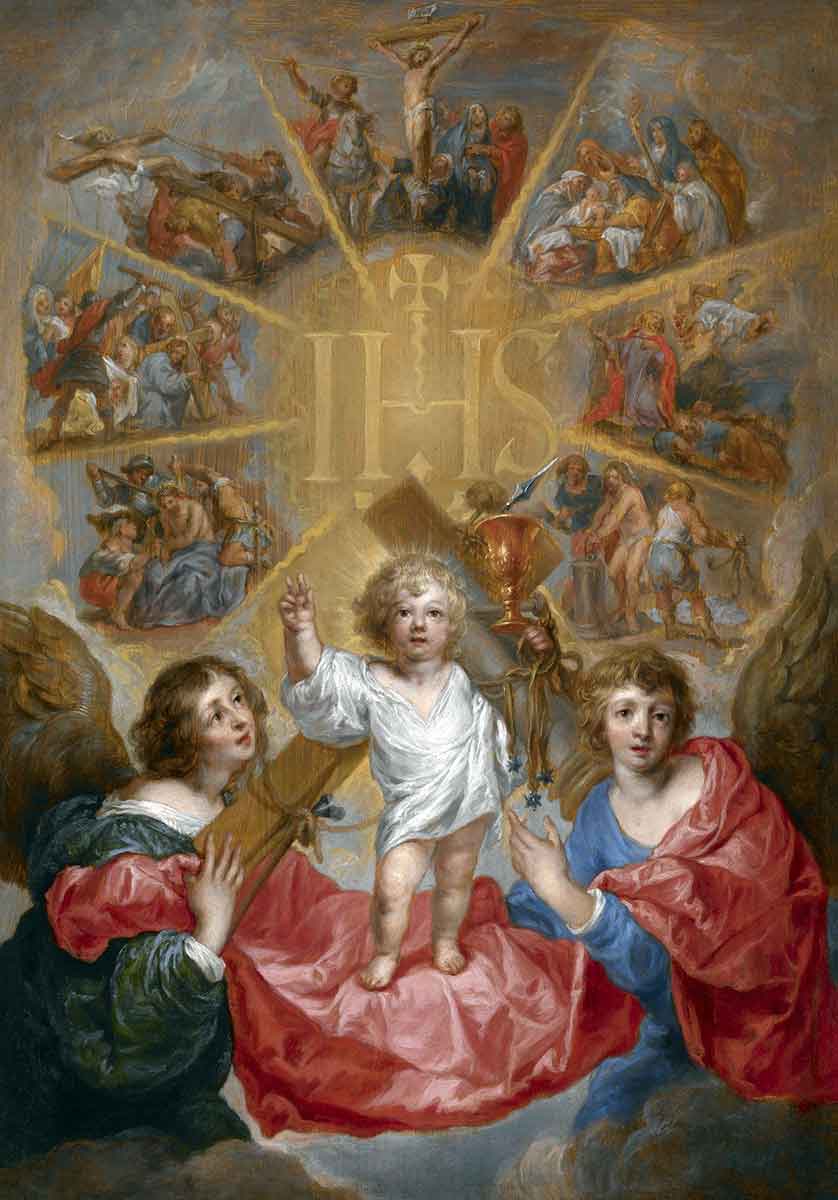
The Glorification of the Name of Jesus by Antoon Sallaert +
The Glorification of the Name of Jesus · Antoon Sallaert · MFA Houston

Therefore God exalted him to the highest place, and gave him the name above every name — that at the name of Jesus every knee should bow, and every tongue confess that Jesus Christ is Lord. Philippians 2 · The Hymn's Final Movement

For a persecuted church, the creed's ending was its comfort: the story finishes in peace, not in the arena. How decisive these formulas were in spreading the faith, no one can measure — but for the millions who could never read a scroll, a creed was a Gospel they could carry anywhere: learned, spoken, and shared.